Unveiling the Dark Cosmos: Decoding Misanthrope's 'Born Killer Deicides' and the Enigma of "Tueur Né"
The realm of extreme metal often serves as a canvas for profound, often unsettling, philosophical explorations. French avant-garde metal band Misanthrope stands as a prime example, their lyrics delving into cosmic rebellion, existential defiance, and an audacious reinterpretation of theological concepts. At the heart of one of their most compelling lyrical statements, from the track "Les Empereurs Du Néant" (Emperors of Nothingness), lies the potent and evocative phrase: "Tueurs n��s déicides" – 'Born Killer Deicides'. This phrase, particularly the core concept of Tueur Né, resonates far beyond the confines of a metal song, touching on archetypes that permeate popular culture, from cinematic anti-heroes to the roles we play in interactive narratives.
In this comprehensive analysis, we'll dissect Misanthrope's audacious lyrical vision, explore the multifaceted meaning of "Tueur Né," and trace its echoes through different cultural landscapes, offering insights into its enduring power and unsettling allure.
The Cosmic Blasphemy of Misanthrope's "Tueur Né Déicides"
Misanthrope’s "Les Empereurs Du Néant" paints a picture of ultimate defiance against divine authority. The repeated lines, "Assis à la droite du Père / Puissance de l'univers, rebelle égal de Dieu" (Seated at the right hand of the Father / Power of the universe, rebel equal to God), immediately establish a blasphemous inversion of traditional Christian iconography. This isn't merely rebellion; it's an ascent to a position of equal, if not superior, cosmic power, achieved through a conscious act of defiance. The entity described is not just a rebel, but one who challenges the very notion of divine singularity, claiming parity with the ultimate creator.
Within this grand, dark tapestry, the declaration "Tueurs nés déicides" lands with immense impact. Let's break down its components:
- Tueurs nés (Born Killers): This suggests an inherent, pre-ordained capacity for destruction. It's not a choice made, but a nature possessed from birth. This implies a destiny intertwined with the act of killing, a primal urge that defines their very existence. The idea of a "born killer" challenges notions of free will and environmental influence, positing an innate, perhaps even genetic, predisposition to violence or radical action.
- Déicides (Deicides): This term refers to those who kill a god. Historically, it carries immense theological weight, often associated with sacrilege and ultimate transgression. In Misanthrope's context, coupled with "born killer," it elevates the act beyond mere mortal murder to a cosmic scale. These entities are not content with lesser targets; their very being is geared towards the overthrow and annihilation of divine power.
The lyrics further elaborate on the methods: "Par de sombres procédés de complexe magie noire" (By dark procedures of complex black magic). This adds a layer of forbidden knowledge and esoteric power to their rebellion, suggesting that their rise is not just through brute force but through mastery of hidden, ancient forces. The culmination is the "Misanthrope immortel étincelant au firmament des cieux" (Immortal Misanthrope sparkling in the firmament of the heavens) – a self-referential nod to the band's name, embodying this rebellious, god-slaying, eternally powerful entity.
Misanthrope's interpretation of "Tueur Né" is thus a profound statement on existential defiance. It posits an entity inherently destined not just to kill, but to kill that which is considered ultimate and sacred. It's a bold assertion of chaotic free will in the face of predestined order, a theme often explored in philosophical texts and extreme metal alike.
"Tueur Né" Beyond Metal: Juliette Lewis and Pop Culture's Fascination
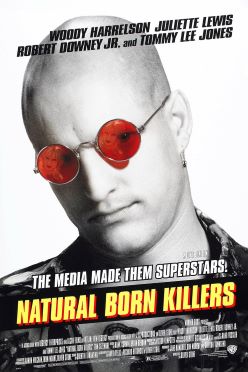
While Misanthrope's use of "Tueur Né" is deeply philosophical and steeped in dark cosmic imagery, the phrase, or its conceptual twin "Natural Born Killer," holds significant cultural resonance beyond the realm of French metal. One of the most prominent connections in popular culture comes through the iconic performance of Juliette Lewis in the Oliver Stone film *Natural Born Killers* (1994).
The French title for the movie is indeed *Tueurs-nés*, the plural form of our core term. Juliette Lewis's portrayal of Mallory Knox was raw, visceral, and unforgettable. Her character, alongside Woody Harrelson's Mickey Knox, embodied a chaotic, almost primal urge for destruction and rebellion against societal norms. The film explored themes of media glorification of violence and the psychological underpinnings of individuals who seem inherently predisposed to extreme acts.
Juliette Lewis, beyond her acting prowess, also embarked on a notable musical career, first with Juliette and the Licks, and later as a solo artist. Her music, as noted by Beachbrother Magazine, evolved from punk to a blues and psychedelic rock sound, showcasing her vocal and songwriting talent while retaining her signature "raw screams." Her transition from the screen to the stage, carrying the intensity she brought to characters like Mallory, only reinforces the idea of a potent, untamed energy – a metaphorical "born killer" of expectations, perhaps, in the music scene. To delve deeper into her journey, you might explore Juliette Lewis: From 'Natural Born Killers' to Rock Voice.
Comparing these two interpretations of "Tueur Né" reveals fascinating divergences: Misanthrope's vision is abstract, cosmic, and aimed at deicide, challenging universal laws. The *Natural Born Killers* interpretation is grounded in human psychology and societal critique, reflecting a visceral, anti-establishment rage. Both, however, tap into the disturbing yet captivating notion of an innate, powerful, and destructive force.
Deicides and the Archetype of the "Tueur Né"
The concept of a "deicide" – the killing of a god – is a rare and profoundly transgressive act in mythology and theology. It speaks to the ultimate challenge to power and order. Historically, myths feature gods being wounded or even killed by other gods or powerful beings, but the Misanthrope lyrics introduce an entity, the Tueur Né, specifically born for this purpose. This shifts the act from an extraordinary event to an inherent destiny.
The archetype of the Tueur Né, or 'Born Killer', resonates across various forms of storytelling. It raises profound philosophical questions:
- Nature vs. Nurture: Is destructive capacity an innate trait, or is it shaped by environment and experience? The "born" aspect strongly leans towards nature, suggesting an inescapable destiny.
- Destiny vs. Free Will: If one is "born" a killer, does that negate personal responsibility? Or does the choice to embrace that inherent nature become the ultimate act of will?
- Hero or Villain: In some narratives, a powerful, destructive force might be necessary to dismantle an oppressive system, blurring the lines between hero and villain. Misanthrope's "rebel equal to God" certainly falls into this morally ambiguous territory.
This powerful archetype isn't confined to passive observation. In interactive experiences, such as the Nuit Blanche sur l'Alsace event, roles like "Cultistes, Créatures Horrifiques, Fantômes, Statues parlantes, Aliénés, Victime de rituel, Esclave minier," and crucially, "Tueur!" were offered. Here, the participant actively embodies the concept. To be designated a "Tueur!" in such a setting is to step into a role of disruptive power, a force that alters the narrative. This demonstrates the broad applicability of the "killer" concept, whether literal or symbolic, in shaping our understanding of conflict and agency.
Understanding the layers behind the Tueur Né concept helps us appreciate its complexity, from Misanthrope's cosmic declaration to its portrayal in cinema and interactive storytelling. For a broader look at how this idea permeates culture, consider reading Tueur Né: Exploring the Killer Concept in Pop Culture.
Analyzing Complex Lyrics: Tips for the Discerning Listener
Misanthrope's lyrics, like many in the avant-garde metal scene, are dense with symbolism and philosophical undertones. For those looking to delve deeper into such intricate lyrical landscapes, here are some practical tips:
- Translate and Define Key Terms: Begin by ensuring a precise understanding of foreign language phrases. For "Tueurs nés déicides," knowing that "Tueur Né" means "Born Killer" and "Déicides" means "Deicides" is foundational.
- Contextualize within the Artist's Oeuvre: Research the band's broader lyrical themes, interviews, and philosophical influences. Misanthrope, for instance, often explores themes of misanthropy, cosmic horror, and anti-religious sentiment.
- Identify Allusions and References: Look for biblical, mythological, historical, or literary allusions. "Assis à la droite du Père" is a direct biblical reference, whose subversion is key to the meaning.
- Consider the Music's Atmosphere: How does the music itself enhance or complement the lyrical message? The intensity, dissonance, or melodic choices can deepen the interpretation.
- Discuss and Debate: Engage with other fans or analysts. Different perspectives can uncover nuances you might have missed. Online forums and fan communities are excellent resources.
- Read Critically: Don't just accept a surface-level meaning. Ask "why?" Why is this specific imagery used? What is the ultimate message the artist is trying to convey about humanity, existence, or power?
By employing these techniques, listeners can move beyond simply hearing the words to truly understanding the profound artistic and philosophical statements embedded within complex lyrics like those of Misanthrope.
Conclusion: The Enduring Power of the "Tueur Né"
From the philosophical depths of Misanthrope's "Born Killer Deicides" to the raw, societal rebellion embodied by Juliette Lewis's characters and the engaging roles in live-action narratives, the concept of Tueur Né or 'Born Killer' stands as a powerful and enduring archetype. Misanthrope elevates it to a cosmic declaration of inherent, god-slaying rebellion, challenging the very fabric of divine order and asserting an immortal, defiant will. This interpretation contrasts with, yet is conceptually linked to, the visceral, human-centric violence depicted in *Natural Born Killers*, showcasing the versatility of the concept across different media. Ultimately, whether it denotes an innate destructive force, a chosen path of ultimate transgression, or a narrative role, the "Tueur Né" compels us to confront profound questions about nature, destiny, and the potential for both creation and destruction within the human – and indeed, the cosmic – spirit. Its continued presence in art and culture is a testament to its unsettling power and its capacity to provoke thought and introspection.